Four focus areas to build team culture with purpose
So many people talk about company culture like it's solely based on factors outside of their control: how many people work there, the structure of the teams, the type of industry, the attitudes or approach of the leadership team, etc.
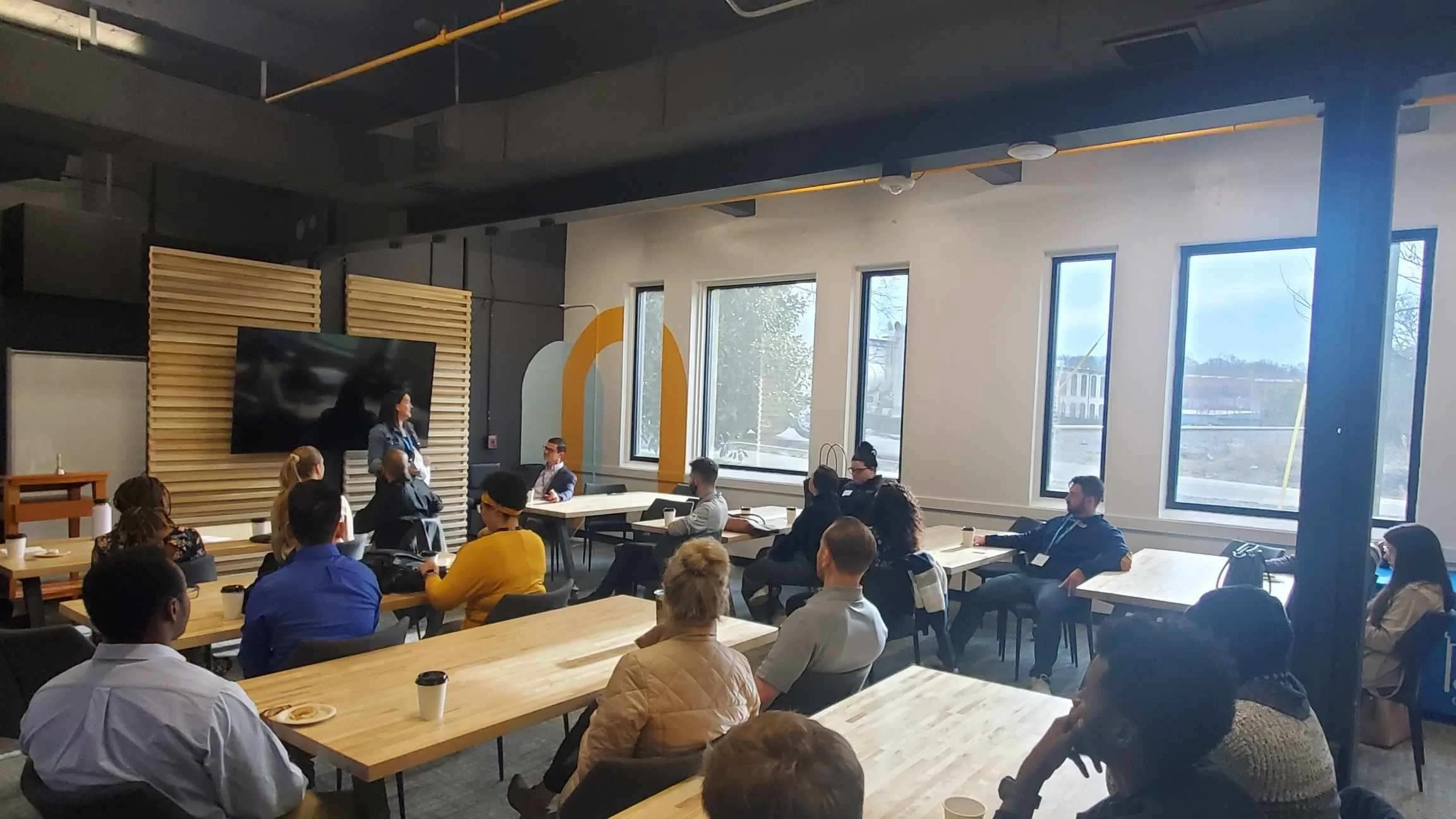
What I want you to consider is that it's actually an aggregate of each employee, and we're all responsible for intentionally building it.
That may sound daunting, maybe even overwhelming. You may be thinking 'where do I even start?' or 'what about the people who are just negative and bring down the energy of the group?'
Don't worry, I've got you.
This blog post will help you break down this approach to culture into four meaningful and approachable ways to connect with your teammates to be more intentional, AKA - where do you even start.
And yes, negativity can easily crush creativity, connection, and trust on the team. So we need to be intentionally building those characteristics, and in turn, the negativity of one person won't take down the rest of the team. We'll be stronger and more positive as a group.
These concepts to building culture are nothing new, but I've found that most organizations are only focused on one, maybe two consistently. In order to make the most impact on building a positive and trusting culture, we need all four of these regularly.
Building personal connections
Deepening professional connections
Learning and practicing new skills
Planning for the future together
What I've found is that all of these build trust in different ways. And when we trust each other as a team and company, we're going to be more engaged, more positive, and more hopeful about the future. We're going to be invested in each other and our success as an organization.
Building personal connections
When we get to know each other personally, it helps us find common ground to connect with one another. This is especially helpful for employees across generations who at first may feel like they have nothing in common.
We don't have to be best friends to have a personal connection, or even friends really. But rather, it's about connecting on something not entirely work related, and building trust and respect for one another.
Ideas of how to get started:
Plan easy-to-approach social events like happy hours, breakfast, or lunch for individuals to meet and mingle with people they don't normally work with.
Encourage individuals within the team to invite one another to connect over coffee or lunch one-on-one, to build their connections individually.
Deepening professional connections:
This is one that often gets overlooked because we think if we work together we all understand each other's roles. But a lot of times, we don't really know what other people on our team or across our organization do on a day-to-day basis.
By seeing behind the curtain a bit more of what someone is responsible for, the kind of decisions they're making, or the impact their work has on the organization, you will gain more respect for them and have a better idea of how to collaborate together or work more efficiently together.
Ideas of how to get started:
Have individuals present to the rest of the team something they're working on and have the team ask questions to understand it better and see how it connects to their own work (could be a monthly or weekly rotation).
Encourage new employees to shadow each person on the team within their first 90 days for a day or few hours at a time.
Pair up team members with someone they don't work closely with, assign them a scenario that they have to role play from the other person's role to understand how other areas of the team or organization are involved.
Learning and practicing new skills
When we're learning together, we're naturally going to grow together as a team and build more trust for each other. But even deeper, when we're practicing a new skill together we have to create a safe space together to try something new, be vulnerable, and potentially fail. This also opens the door for something we can come back to and support each other with in the future.
Ideas of how to get started:
Soft skills training like: leadership trainings or behavior assessment (DISC, Myers Briggs, Clifton Strengths, etc.).
Hard skills training like new software you're using or role-specific skills (sales, marketing, accounting, etc.).
Attend conferences or industry-specific association meetings then share your learnings with the rest of the team.
Planning for the future together
This is another culture-building foundation that gets missed by a lot of organizations who have all the future planning done by the executives or leadership teams, then simply cascade the goals and ideas down to the rest of the organization.
Instead, if we can brainstorm and collaborate in our teams about how we're going to bring these goals to life, it keeps the individuals invested in our future together and our time together. It keeps everyone more motivated when they were involved in the planning, not just told what to do. And of course, by working together we'll likely come up with better ideas than when they're created individually.
Ideas of how to get started:
Host an annual planning session for your team where everyone comes together to discuss how the organization or team-level goals will impact everyone's roles and brainstorm new ideas.
Host quarterly checkpoint meetings to hold everyone accountable, measure progress, and brainstorm pivots and new ideas when needed.
Building culture starts with your own leadership habits. Take the free Leadership Blind Spot Audit to see which of these four areas needs your attention first. Take the audit here.

Brittany Canaski is a highly-rated Leadership Coach, Trainer, and Founder of Hello Velocity where she builds confident leaders and high-performing teams. When she's not building her business, you can find her planning her next travel adventure with her husband, watching Formula 1 racing, or volunteering in her local community of Charlotte, NC.