Happy hours are not team building events. Here's why.
Calling happy hours a team building event has become one of my biggest pet peeves while working in the leadership training and coaching world.
When I talk with team managers or HR managers about how they bring their teams together, happy hours is usually the most common answer.
I understand that happy hour events are typically easy to plan, inexpensive to execute, and most common. However, with more intentionality comes greater inclusivity, engagement, and thus team results back in the workplace.
What’s important here is the difference between team building and team bonding.
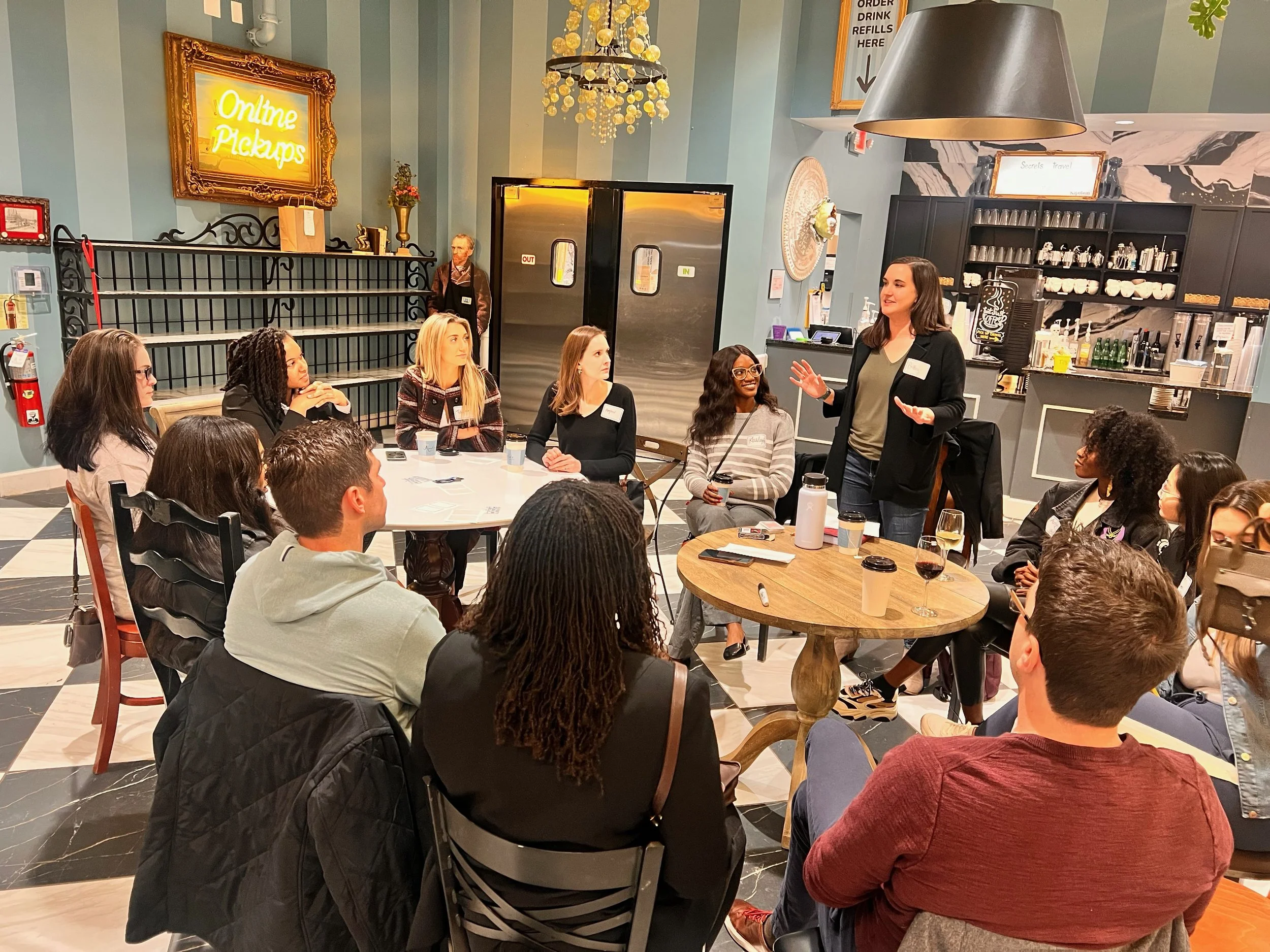
Team buildingevents teach your team members new skills that will help them work more effectively together and build trust. This can cover either soft or hard skills, with events like formal trainings and workshops, or indirect learnings through intentional activities and games with discussions for how to bring these learnings back into the workplace (communication, leadership, story-telling, etc.).
On the other hand, team bonding is all about enhancing the interpersonal relationships within the team. This helps team members get to know each other better personally, which can in turn organically build trust amongst team members. When there is more trust within the team, the team members are more likely to help each other out more, communicate more effectively (and quickly), and it can reduce conflict.
So, most happy hour team events are usually team bonding, not team building.
There are ways to make your next team bonding event more intentional, even if it is a happy hour. But first, you should be aware of some common issues and mistakes that can detract from the event . To be most effective, consider some loose structure and guidelines (below) to get the most from your next team event.
Issues to watch out for with happy hour team events:
Employees talk with the same people they always talk with.
When this happens, they're not building new connections with people they don't yet know. This can also quickly lead to the feeling of people being left out and cliques.
Recommendation: encourage people to mingle across teams and speak with someone new.
You'll likely hear a lot from the extroverts and leaders, but introverts and newer employees may stay quiet.
This is especially true for virtual happy hours. These dynamics can alienate people from the conversation and they may leave feeling like 'what's the point?'
Recommendation: have one person (or a few) that can help guide conversations, encourage cross-mingling, and for virtual events offer smaller breakout rooms.
You're likely alienating team members who don't drink (or don't want to drink).
36% of Americans describe themselves as total abstainers from alcohol. Events like this tend to create pressure to drink or to justify why they aren't drinking which can cause personal discomfort.
Recommendation: make sure the event itself is not centered around alcohol and that there are plenty of non-alcoholic options available (not just water).
Team members may feel that work is overstepping into their personal time.
After hour events can put stressors on certain teammates; consider parents needing a babysitter, caretakers stressing to get home earlier, or people who commute from further away having to drive home late.
Recommendation: prioritize team events during regular working hours (or as close as possible). If the event must be outside of working hours, give people at least four weeks notice to make arrangements as necessary.
Hourly workers and contractors are less inclined to attend if they aren't being compensated for the time.
This concern is often overlooked or unclear for team members. When employees aren’t being paid for their time that is a team-obligation, they can build up unwanted resentment which will in turn defeat the point of the event.
Recommendation: allow hourly workers and contractors to charge the time (or part of the time) as non-billable working hours.
At most traditional team happy hours, people aren't having intentional conversations. There is little purpose or intention behind the event besides drinking alcohol. If you're looking for more intentional team building, it's best to bring a professional in to facilitate a learning workshop, game/activity, or intentional discussions.
Ready to plan a team event with more intention? Let's talk. Explore Team Building Events.

Brittany Canaski is a highly-rated Leadership Coach, Trainer, and Founder of Hello Velocity where she builds confident leaders and high-performing teams. When she's not building her business, you can find her planning her next travel adventure with her husband, watching Formula 1 racing, or volunteering in her local community of Charlotte, NC.