Adaptability is a necessary skill for leaders to handle change
When most people talk about leadership skills you'll hear topics like delegating, strategic thinking, and building trust.
One that is becoming more important than ever, yet not discussed enough I'd argue, is adaptability.
Adaptability is your ability to proactively navigate changing conditions, circumstances, or situations.

This is crucial in our current workforce because of the constant changes we're having to react to: new technology evolving quickly (AI), economic and political changes (tariffs, DEI policies, etc.), and a constantly evolving labor market (quiet quitting, return to office mandates, etc.).
It's easy to fall into an avoidance mentality when it comes to changes happening around us outside of our control.
Most people naturally resist and dislike change. As humans, we thrive on the comfort of stability, routines, knowing what to expect, and maintaining the status quo of our work and work environments.
Leaders need to be able to not only adapt to change as it happens but also proactively plan for it and help lead their teams and companies through the changes as well.
Being adaptable in the midst of on-going change will also save you time, energy, and money over the long term.
This may seem counter-intuitive at first, but think about these examples:
When you wait to learn something new, you're delaying the benefits that it can provide.
When you wait to react to an industry shift after it has already happened, you'll likely fall behind your competitors.
When you avoid workplace trends or feedback from your employees, you're more likely to experience higher levels of turnover.
A specific tool I use to help my clients navigate the process of being adaptable is the Scott and Jaffe Change Model (originally created by Cynthia Scott and Dennis Jaffe in their article Survive and Thrive in Times of Change in 1988).
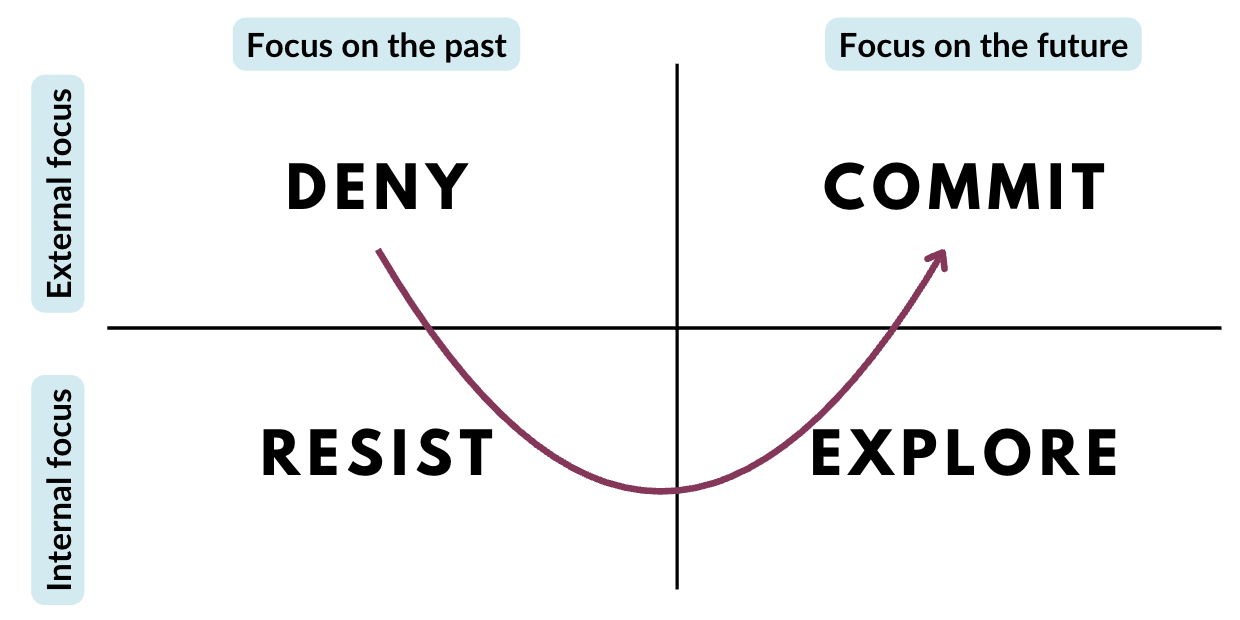
Scott and Jaffe Change Model
This model shows the typical process for individuals navigating change. I've found that when we are able to name the stage we're in, it allows us to better understand why we may be reacting the way we are in uncertain situations, and can give us hope and direction for moving through it quicker.
You’ll notice this model has four key quadrants: Deny, Resist, Explore, and Commit. Along the y-axis we see a change from internal focus (bottom half) to external focus (top half). On the x-axis, we see a focus on the past (left half) and a focus on the future (right half). These indicates the focus areas of the individual as they are processing and reacting to change.
This model reminds us that the first three stages are temporary and our ultimate goal is to get to a place of commitment. This final phase looks like committing to the changes in our circumstance instead of clinging to the past or how it was always done before.
The four stages of the process (in order) are:
Deny
Here, people may have seen or heard about change that's happening or about to happen, but they stay focused on the past and how it's been. They are looking at their environment, seeing that it hasn't changed yet, so they deny that change is happening and focus on business as usual. At first, this can even look like commitment because there isn't much backlash or negative feedback about the change. Sometimes, people are in a bit of shock and aren't sharing their concerns externally yet.
Recommendation: Be as transparent as possible. Let the information sink in before trying to get anyone on board with new plans and ideas.
2. Resist
In this stage, people may begin to see some changes happening externally, and start to focus on the personal impact on them. They may share their personal feelings like frustration, anger, disappointment, and more externally. Productivity drops drastically here.
Recommendation: Allow your team members the space to express their concerns to support them through this change. You may not have all the answers but hearing their concerns can allow you to move through this phase quicker.
3. Explore
In stage three, individuals start to look to the future about how this change could impact themselves. They get curious to learn about what's happening and start to think more proactively and strategically about their future and how these changes could impact them personally. This phase can build new bonds in the team, and you may notice new creative and innovative ideas.
Recommendation: This phase can feel a bit chaotic since there are a lot of new ideas being thrown around. Support your team by helping them prioritize their new ideas and converting the ideas into actionable goals.
4. Commit
Lastly, individuals begin to take their learnings and and can apply them externally. They can create a new plan that has them moving forward in this new direction. They start to make changes in their work, their processes, and environment to adapt to these changes. This phase lasts until the next big change in the organization.
Recommendation: Make it as easy for your team to commit by co-creating clear plans connected to each goal.
Overall, one of the simple ways I've found to be adaptable wherever you're at in this process is to check in with your priorities.
Ask yourself - based on what I know now, does anything need to change in my priorities?
And remember: as much as we think we can - we CANNOT predict the future. So instead of assuming we know what's going to happen, it's best to stay open minded and willing to adapt as life, work, and the world inevitably surprises us with change.
Building real adaptability takes more than one blog post. Explore the Lead with Confidence Program for a personalized plan.

Brittany Canaski is a highly-rated Leadership Coach, Trainer, and Founder of Hello Velocity where she builds confident leaders and high-performing teams. When she's not building her business, you can find her planning her next travel adventure with her husband, watching Formula 1 racing, or volunteering in her local community of Charlotte, NC.