Why is emotional intelligence important for leaders?
Emotional intelligence is the ability to be aware of, control, and express one's emotions, while handling interpersonal relationships. This can be one of the most difficult yet most needed skill of a leader.
This is what allows leaders to handle difficult situations most effectively by being a guiding light to others during times of uncertainty.
A lack of emotional intelligence looks like taking things personally, getting defensive, and getting caught up in your own or other's emotions.
Leaders show their emotional intelligence by offering a safe space for someone on your team to open up, being able to de-escalate highly charged situations, and staying calm and collected during difficult situations.
In order to build your own emotional intelligence, you need to focus on the four key skills within emotional intelligence.
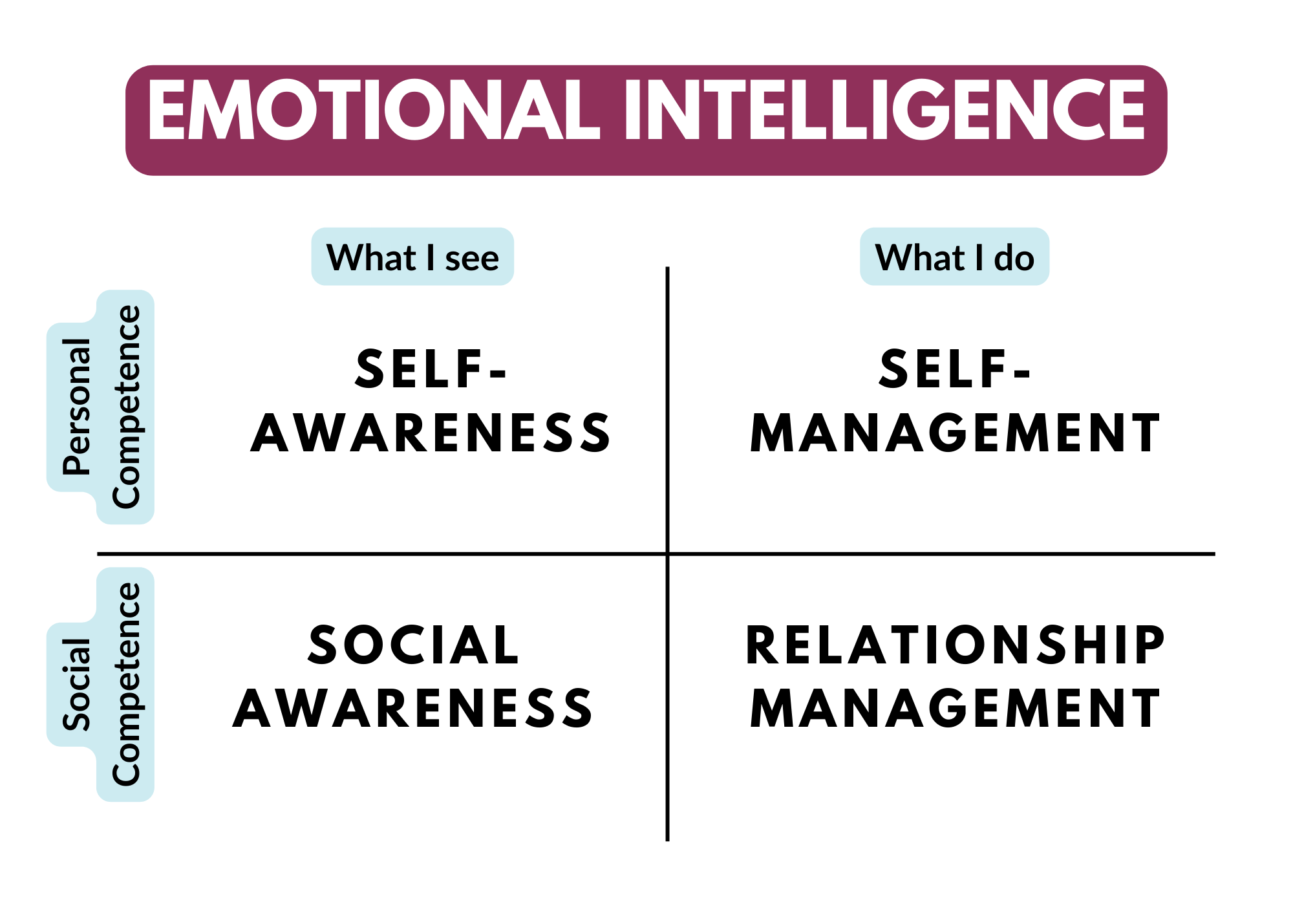
From Emotional Intelligence 2.0 by Dr. Travis Bradberry and Dr. Jean Greaves
1.Self awareness - identifying your own emotions and patterns in the moment.
Here you need to be able to identify and understand your emotions and how you typically react in emotionally-charged situations, like when you're overwhelmed, surprised, frustrated, and optimistic. We all typically have a knee-jerk reaction to these emotions, and unfortunately, not all of them are helpful as a leader.
My biggest recommendation to help your self awareness is to start tracking your emotions throughout your work day. Get to know your emotions on a deeper level - what emotions are coming up for you each day? What does it feel like in your body? What are common triggers for these emotions? What's your usual reaction to these emotions? There's no right or wrong answers here, consider it an exploratory process.
2.Self-management - choosing and practicing new behaviors to work through your emotions (and not lash out, yell, cry, avoid, etc.). Being able to intentionally respond in situations vs react.
This will allow you to maintain integrity, and in turn, build trust with your team. Conflict is always going to happen, even with the best team, so what’s important is how you approach conflict.
From the exercise above, review any of your reactions that were not helpful, then commit to new, intentional responses you'd rather take on in those situations. This will take some time to shift to new responses over time since these are typically life-long habits you're trying to break. Consider ways to make this intentional response as easy as possible for yourself like having post it reminders, mantras each morning, or an accountability buddy.
In order to help your self-management on an on-going basis, I recommend taking care of your mental, emotional, and physical well-being. This allows your to better control how you respond in situations, and not just react because of low energy or stress (ever snapped at someone because you were hungry? Same idea).
This may require you to create new personal habits like working out, snacking or journaling and being clear on your boundaries like not taking work calls after hours, no checking emails on the weekends, and waiting 24 hours to respond to an angry email.
3.Social Awareness - understanding and holding space for other people’s emotions or reactions in situations (i.e. reading the room). This includes reading other people's body language, facial expressions, posture, and tone of voice.
This skill will allow you to build empathy for and be respectful of your team members.
We need to remember we are not robots. People you work with will think and react differently than you do, and there's a lot more going on in their world than you will ever know.
Techniques to build your social awareness include: active listening, being present, asking questions, and not making assumptions.
4.Relationship Management - essentially combining the first three skills to appropriately navigate social situations by having awareness of your own and other's emotions.
With relationship management, you're able to navigate difficult conversations appropriately and be solution oriented. You're also able to be intentional and have more influence with your team.
Our objective here is to acknowledge not stifle or change other people’s emotions. Most of us want to jump into 'fix it' mode during uncomfortable situations, but sometimes people just need to be heard.
Techniques to build your relationship management skills are matching your body language and tone with the other person or as needed in the situation. You want to put yourself in their shoes and meet them where they're at, emotionally. Sometimes that could be providing a listening ear, or a calming presence, or brainstorming solutions with them (if they're open to it).
Curious where your emotional intelligence blind spots are? The free Leadership Blind Spot Audit covers emotional intelligence plus five other core leadership skills. Take the audit here.

Brittany Canaski is a highly-rated Leadership Coach, Trainer, and Founder of Hello Velocity where she builds confident leaders and high-performing teams. When she's not building her business, you can find her planning her next travel adventure with her husband, watching Formula 1 racing, or volunteering in her local community of Charlotte, NC.