Unlock your productivity with this simple formula
Before we talk about productivity, we need to address performance.
A common misconception I see about productivity is that there's a one-size fits all cure. People share software programs, apps, and rules they follow that will change your life. The problem with this is that it assumes everyone thinks and works the same way.
Let's start at the basics, what is productivity? Being productive means improving your performance or results with the same or less effort.
The best way we can do that is to find our flow, zone of genius, or what I like to call peak performance, more often.
A lot of times people think they need all conditions to be perfect to get in their peak performance zone:
the amount of sleep they had the night before
the weather that day
their mood or the mood of the people around them
…a lot of external things that aren't in your control
But I've found it's based on factors that are in your control entirely. Not only that, but you can learn to help other people using these methods too.

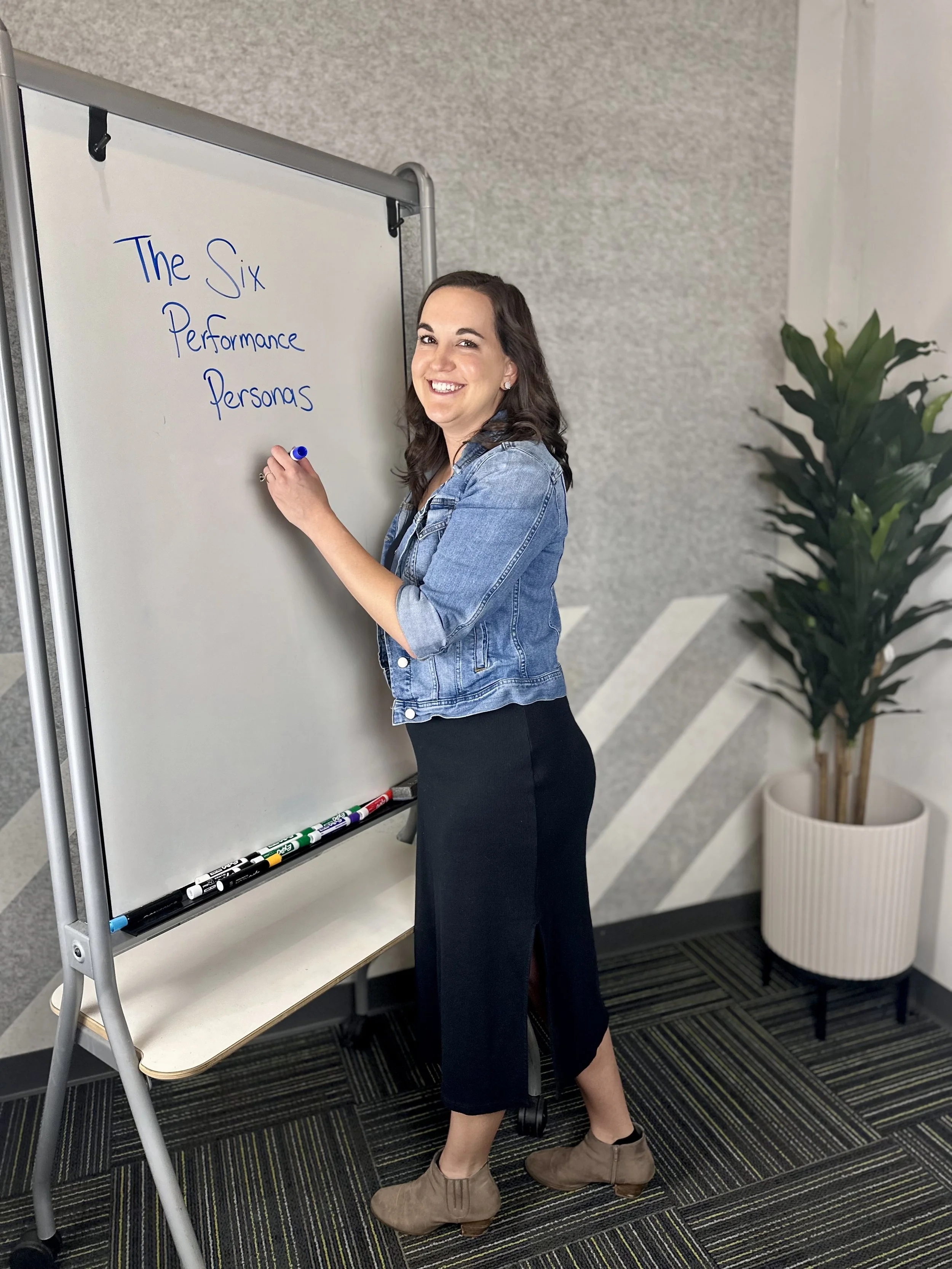
I go into this concept much deeper with The Six Performance Personas in my workshops and individual coaching that customizes your productivity based on your strengths and habits. If you want to dig deeper for yourself or your team, schedule a call today to learn more.
The high-level starting point of this concept is my formula for peak performance:
Clarity + Structure + Confidence = Peak Performance
I've found from coaching dozens of people and teaching to thousands of event attendees, when you're not in your zone of genius, you are missing at least one of these elements: clarity, structure, or confidence.
Based on the one you're missing, you can THEN begin to identify tactics, tools, or techniques to improve your productivity. Here are a few examples to get started based on which element you're missing.
When you're not clear on your goal or end result
You need more clarity.
This is the strategic or long-term thinking that we need to assess everything involved in our goal or project, and see how it can all come together.
What does this look like in real life?
One of my clients who was missing clarity, came to me with 20 different ideas and goals to grow her business, and didn't know where to start or how to narrow down her focus. She would take some action to get started on an idea but it would quickly fizzle out so she wasn't completing many projects or goals that she started.
How did we gain clarity?
We started with an easy tactic: a brain dump where you list out your different ideas or goals and start thinking through the different layers and details involved. This will help you get your ideas out of your head and start to see the bigger picture all at once. You'll then quickly be able to see which are most viable and can prioritize from there.
When you don't have a plan to get you there
You need more structure.
This is the day-to-day details of the goal or project, including the actual execution to move forward on it.
What does this look like in real life?
One of my clients was a new manager, in a new role, building a new team. She didn't have any guidelines to follow and needed to quickly get the team members onboarded, working together, and needed to delegate effectively. Without structure or guidelines to follow, she was finding herself too involved in the weeds of her team's work, was being reactive, and beginning to show signs of micromanaging.
How did we create structure?
Together we talked through clear expectations of herself as a leader, outcomes for the team, and milestones along the way. We also brainstormed cadences for meetings, deadlines, and resources that everyone needed. The leader was then able to more easily delegate, get her head out of the weeds so she could think more strategically about the team and business to empower better results.
When you don't believe in yourself to get there
You need more confidence.
This is the momentum that will help you get started, keep you moving over the long-term, and improve your ability to work with other people along the way.
What does this look like in real life?
Another client had a big new work project he was going to be leading but wasn't feeling confident getting started on his own. He had experience doing this previously with a coworker, but this was the first time doing it on his own. He was spending all his time behind the scenes of the project, creating systems and processes, instead of actually moving forward on the project itself.
How did we create confidence?
We started introducing new daily habits to begin with baby steps of his project. This allowed him to celebrate small wins and build up confidence more quickly. In no time he was taking bigger steps and excitedly sharing his project with everyone he met.
As a reminder, this is just the starting point of this concept and we can dig much deeper together to customize for yourself or your team. Here is a sneak peek into what The Six Performance Personas training looks like.
If you're chasing productivity but still feel drained, take the free What's Causing Your Burnout? guide to find out what's really going on. Take the guide here.

Brittany Canaski is a highly-rated Leadership Coach, Trainer, and Founder of Hello Velocity where she builds confident leaders and high-performing teams. When she's not building her business, you can find her planning her next travel adventure with her husband, watching Formula 1 racing, or volunteering in her local community of Charlotte, NC.